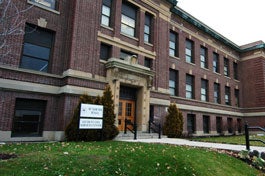
Navigating college as a first-generation student can feel both exciting and overwhelming. That's why connecting with faculty and staff who were also first-generation students can be so valuable.
Building relationships with first-gen faculty and staff can help you strengthen your sense of belonging, expand your support network, and gain insight from those who have successfully charted the path before you. You are not alone—and there is a community here ready to support your success.

Dorit Nevo | Vice Provost & Dean, Graduate Education
I didn’t want to go to college, I had no idea what I wanted to study or do with my life. But my parents made it very clear that I had no say in the matter, so I chose what seemed to be the least-worst major. I hated most courses in my first year. With time, I was able to see which topics and electives were more interesting to me and I made changes and tweaks to find the best fit path for my career. It was definitely a journey rather than a single decision.

Esra Agca Aktunc | Industrial and Systems Engineering Sr. Lecturer
How has being a first-generation college student influenced your career path or work in higher education?
The short answer is that I had to work harder to learn and adapt to higher education and academic careers.
What advice would you offer to current first-generation college students?
Don't be shy to ask questions; people can make assumptions about what you already know and set their expectations based on those assumptions.

Jonathan Stetler | Lecturer Biological Sciences
Neither of my parents had the opportunity to go to college. My father served in the army and started a family with my mother upon returning home. Though they didn’t know how college worked, they knew they wanted my brother and I to have a future that valued enriched through higher education. From the day I moved into my Freshman dorm, I felt this inherent pressure to make my family proud.
Read more of Dr. Stetler's experience as a first-generation student >>
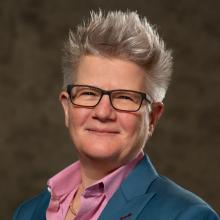
Lee Ligon | Associate Dean of the School of Science
I grew up in a working-class neighborhood in Cincinnati. My parents were teenagers when I was born, and despite not having much formal education, they loved books. Our house was filled with books, which singled me out as “weird” in my decidedly anti-intellectual neighborhood. But books were a great escape and comfort for me from an often chaotic and volatile childhood.
Read more of Dr. Ligon's experience as a first-generation student >>
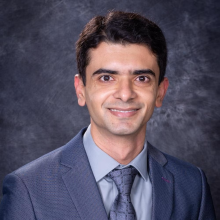
Nabeel Amjad | Mechanical, Aerospace and Nuclear Engineering Lecturer
How has being a first-generation college student influenced your career path or work in higher education?
Coming from a very humble background, being a first-generation college student has been one of the most defining parts of my journey. It taught me the value of perseverance, hard work, and self-belief. I had to navigate every step of higher education—from applications to financial challenges—on my own, often learning through trial and error. That experience built a deep sense of independence and resilience that continues to shape how I approach both my academic and professional goals. It also gave me a strong desire to help others who are walking similar paths. In my current role in higher education, I am deeply committed to creating an inclusive learning environment where students feel seen, supported, and encouraged to succeed regardless of their background.
What advice would you offer to current first-generation college students?
My biggest advice would be to believe in your potential, even when the path feels uncertain. Coming from a humble background, I often questioned whether I truly belonged in higher education—but every challenge became an opportunity to grow stronger. Don’t be afraid to ask for help, connect with mentors, and take advantage of every resource available to you. Remember that your background is not a limitation—it’s a strength that gives you empathy, determination, and perspective. You are paving the way for others who will follow in your footsteps, and that in itself is an incredible accomplishment.

Nicholas Mizer | Games and Experiential Media Assistant Professor
How has being a first-generation college student influenced your career path or work in higher education?
For me, it's hard to point to any specific influence, but I think it contributed to an overall sense that everyone else seemed to know what was going on more than I did. I had less social capital than people assumed I would have looking at me, and I often felt like I was having to make my own way without knowing what I was doing. As a white man, the negative effects of being a first-generation student certainly weren't as strong as others with more marginalized intersectional identities, but a distinctive feature of being a first generation white middle-class student is that it can be a sort of "invisible disability" to the extent that I didn't even realize being a first-generation student was a thing, or that I was one. I had some extended family who had been to college, including my grandparents, and even a great aunt with a PhD, but I wasn't close with those people and didn't receive any guidance or insight from them about what higher education was like.

Ryan Keytack | Associate Vice Provost & Dean of Students
How has being a first-generation college student influenced your career path or work in higher education?
Being a first-generation college student shaped every part of my professional journey. Navigating college without a roadmap taught me resilience, resourcefulness, and empathy—qualities that now guide how I lead and support students. I remember what it felt like to not know what questions to ask or where to turn for help, so I’ve made it my mission to ensure students at RPI never feel alone in that process. My background constantly reminds me that access and belonging aren’t abstract goals—they’re daily practices that require attention, care, and advocacy.
What advice would you offer to current first-generation college students?
Give yourself permission to take up space and to ask questions—lots of them. You belong here, even if it doesn’t always feel that way. Build relationships with mentors, peers, and staff who see your potential and will champion your growth. Don’t let comparison steal your confidence; everyone’s journey looks different, and yours is proof of strength and courage. Remember, your perspective and perseverance are assets to your community and to higher education as a whole.